Sunday, March 27, 2011

Reading Shakespeare Outloud


JB dressed in 16th century garb last summer
Yesterday afternoon, I decided to read some Shakespeare. Weird, I know. I could try to explain the deeper ponderings of why, but it would still be weird.

The last time I really attempted to read Shakespeare (not in kid-friendly format) was lots of years ago in college. I took a Shakespeare class as one of my English electives because I wanted to feel intellectual by learning Shakespeare and I heard it was an easy “A” from an easy professor. I finished the class with a “B”—barely.

I had forgotten how impossible Shakespeare is to read in your head. I started with The Two Gentlemen of Verona. It’s the first play in my Norton’s Complete Anthology of Shakespeare (also bought, by the way, so I would feel intellectual). Quickly, I realized I was in over my head. The words were drowning me. My brain was choking on “How now,” and “thee”, “thou”. Even the side notes and footnotes were not enough to keep me afloat. I was quickly sinking to the bottom of Shakespearean intellect.

Fortunately it dawned on me to try reading aloud. Suddenly, I wasn’t drowning anymore. It wasn’t a smooth sailing, but I was above literary water. The language demanded my full attention and absolute concentration. But with each line spoken (no matter how halting my voice), I seemed to propel forward and strengthen my stroke against the thick current of Shakespeare’s language. I began moving with his words, catching his rhythm, the nuances of his humor and layers of meaning.

My Shakespearean reading event didn’t last long. Imagine that. Before Act I was over, my children burst in with their own drama to report. Someone had been incredibly naughty playing baseball. Defied Daddy. He’s acting like he’s two. He’s in big trouble.

Oh, how we love to gloat over the sins of others!

My little offender plays the false martyr role well. He will accept any consequence you give him with a sort of stoic heroism (in his own eyes, that is). Stoic victimization is closer to reality. Later, my husband and I were discussing the deeper layers of this behavior,  imagining the environment responsible for creating his warped, distrustful view. Wondering, how in the world we will help him break free and fully live.

True living must be done out loud. There must be a willingness to hear the squeaking of your voice, get embarrassed and get over it. When my son accepts his punishment as his “lot in life”, quietly insulating himself against hurt, adding up the score always against his favor, he silences the full life meant to be lived in and through him.

We force him to live beyond his comfort zone. We demand reconciliation and closure in conflict. We nudge him toward selfless acts. We actually expect him to sacrifice sometimes. He has no choice but to live out loud. It is hard work and we don’t do it perfectly. But, we try and we can see him trying, too.

Shakespeare was never meant to be read silently. Neither is life meant to be orchestrated from within. Its most fulfilling moments—forgiveness, sacrifice, service and love—are lived in the open. I have no doubt my child will learn to live out loud. Like Shakespeare, he is destined for it.


Friday, March 11, 2011

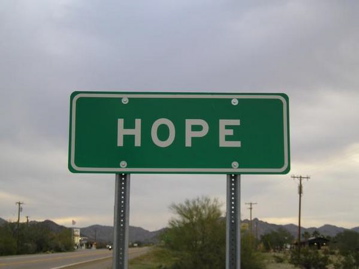
The Words Bleeding Me-- Hope


       When a fringe homeschool family raises unsocial awkward children-- or even worse, neglect their children’s education to the extent it makes national news—it is frustrating for the rest of us raising happy, healthy, intelligent, and socially accepted children.  It may even be the reason we are subject to unnecessary scrutiny and laws.

        When a fringe “Christian” group traverses the country thumping their Bibles, displaying their hate signs and screaming Scripture to condemn others, it is heartbreaking to watch the message of love and hope being smeared and misrepresented.  It may even cause those on the cusp of belief to turn away from God in fear they will become Bible thumping, sign screaming people, too.
  
       When a few despicable greedy people coerce and lie to desperate parents in developing countries, financially gaining by manipulating the life-saving measure of adoption, it leads to an almost complete shut-down of adoption—leaving an estimated 5 million orphans without the opportunity to ever grow in the love of a family.   They may never have the ability to grow at all.

        This is what the orphans of Ethiopia face.  As a way to eliminate scandal within the adoption process, Ethiopia’s Ministry of Women’s and Children’s Affairs (MOWA), along with the Ethiopian Government, created a new policy cutting the number of adoption cases heard in court from 50 to 5 per day.  That is a 90% decrease.  For those unfamiliar to Ethiopia’s adoption process, just know this—rather than it taking several months for children to be united with their families, it could now take years.  Approximately 2,400 children were adopted from Ethiopia last year.  Under the new policy only 240 would have made it home. 

       Just the other morning, I was reading accounts of former gang members of L.A. who told of their initiation process.  Out of such desperation to belong to what they called a “family”, they would kill an innocent person—someone picked at random.  If they could murder in cold blood, they were in.  Despite their considerable dislike towards the command, their deep longing to “belong” took precedence.

        Children need families.

          Last week, JB missed the turn to our house, while on a bike ride with Sam and my husband (who was running with them).  Sam yelled for JB to come back, but he was too far ahead and too full of feeling the wind on his face.  The story ends happily, of course.  JB was recovered by Daddy and Sam within 5 minutes.  No harm done.  But JB’s little world was momentarily shaken.  He was melancholy the rest of the day, and even had trouble going to sleep at night.  We had a lot of rocking and holding.  Finally, he looked at me with crocodile tears in his eyes:

            “I was so scared, Mommy.  I thought I had lost my family again.  And now I wouldn’t have a family to love me anymore!"

Children need families. Yes-- they need food, water and education, too.  But not like they need families.

           Those of us who have adopted from Ethiopia, or are in the process of adopting from Ethiopia have a choice to make.  We can wring our hands, feeling angry, allowing our minds to think only the worst—or we can hope. 

Hope is a small word, but it carries an eternal promise.  It challenges us:

 “Do not be sad in the trials.  Rather, rejoice.  Because suffering brings perseverance, perseverance brings character and character, hope.  And hope does not disappoint us, because God has poured out His love into our hearts by the Holy Spirit, He has given us (Romans 5:2-5 paraphrased).

“Yet you heard my cry for mercy, when I called to you for help… The Lord preserves the faithful… Be strong and take heart, all you who hope in the Lord!” (Psalm 31)

Hope does not disappoint.

I happen to believe that the same God who guided JB, Risa and every other orphan into the hands of loving families, is the same God who sits over the nations of the world:

“The Lord foils the plans of the nations; He thwarts the purposes of the peoples.  But the plans of the Lord stand firm forever, the purposes of His heart through all generations.” (Ps. 33)

Already, the faithful prayers of believers have availed much.  Meetings continue to happen.  The plans of the Lord stand firm. Hope lives.

Goodness knows I hate going through suffering to get at hope.  If I had known how traumatic these last 20 months would be… well… I’m just thankful I didn’t know. 

Children deserve a future and a hope. 

Continue to pray.  There is always Hope.


PS... These two blogs have helped me pray specifically.  Though both were written before the new policy was announced, I think the prayers are still an excellent guide:


Friday, March 4, 2011

The Words Bleeding Me-- Trust


What an unwelcome friend.  A running injury.  My Achilles tendon is painfully swollen, halting all running in the most crucial weeks of mileage. 

            My only other running injury was to my IT band—the illiotibial tendon which runs along the outside of the leg from hip to knee.  That was five years ago and a most troublesome experience.  Many months of running in pain. Running then walking.  Not running at all.  I was so scared.  Terrified of the unknowns.  Plagued by the “What ifs…?”.

            “What if it never heals?”

            “What if I can never regain my momentum?”

            “What if…?”

            My husband constantly chided me, “You have to have faith.  Believe it will heal.  Trust that you are doing the right things for it.  Stop being so negative.  You can’t live in fear and heal.”

            “But what if…?”

            Now, five years later, with my leg propped up on pillows, I’m hearing the same old thing.  “Stay positive.  Relax.  Trust it will get better.”

            There’s that word again.  Trust.  Trust in what?  Trust in the therapy?  Trust in the rest?  Trust in miraculous healing?  

            "Trust in the LORD with all your heart, lean not on your own understanding.  In all your ways acknowledge Him, and He will make your paths straight."  Proverbs 3:5-6

            E.M Bounds calls trust, “Faith in full flower…It is firm belief.”

             “Trust sees God doing things here and now… [it] brings eternity into the annals and happenings of time, transmutes the substance of hope into the reality of fruition and changes promise into present possession.”

            Hope to reality.  Promise into present possession. 

Bounds goes on to explain that trust sees God doing things here and now.  Even more.  Trust expands its sights into the eternal and brings it to the happenings of time.

Hope to reality.  Promise into present possession.

Trust in a thing, activity or organization is passive and carries no substance.  Trust in a person is where Trust flourishes.  Healthy relationships are the fertile soil for trust to grow and thrive.  Children trust their parents.  Husbands trust their wives and vice versa.  Faith-filled people trust their God. 

At least… these all happen in a perfect world.

Trust is something I took entirely for granted; until I adopted my Ethiopian children.  In my relationship with my biological boys, I unknowingly enjoyed a sweetly cocooned life filled with mutual trust, understanding and unhindered love.  They trusted me to nurture them and always have their best interest at heart.  Because they have never experienced anything but fullness of trust, they operate out of a position of trust.  Their instinct is to trust.

Not so with JB and Risa.  Their instinct and consequently their actions tend to be born from lack of trust.  It was a blow to my mommy ego.  How do you parent children who don’t trust you?   The relationship is broken before it even begins.  

Part of the missing trust is simply a natural part of the transition-- the grieving and bonding process.  The rest, as far as I can discern, stems from their lives pre-us.

One child recovers quickly.  There is evidence of healthy, trust-filled relationships in this one’s life.  This child now thrives in the cocoon.    

The other child still holds trust at arm’s length.  Scared to let faith fully flower.  Though there is much of this child’s life I will never know, I see the effects.  Unwillingness to release into the cocoon.  Expecting the worst from people rather than the best.   The “What ifs… “ plague this child. 

Just as I cannot force my tendon to heal, just as I cannot force character to develop, I realize I cannot force faith to fully flower.  

“Trust grows nowhere so readily and richly as in the prayer chamber,” says Bounds.  “The eye and presence of God give vigorous life to trust, just as the eye and the presence of the sun make fruit and flower to grow, and all things glad and bright with fuller life.”

It is time for me to look higher than my children’s field of vision.  It’s time for my eyes to see the eternal, grab what is hoped for-- change it to reality—from the position of bended knee and bowed head. 

“All things are possible to him who believes,” Jesus says. 

It is time for me to believe.  “What ifs…” have no place in my life or the life of my children.  Not for my body.  Not for my mind.  Not for my child. 

Excuse me.  My chamber is waiting.


Sunday, February 27, 2011

Prayer to end Human Trafficking


            Last night before going to bed, I already had a sense of purposefulness for this morning’s quiet time.   Rather than my usual reading and journaling, I asked God to reveal His desire through specific Scripture—though I had no idea where in the Bible such scripture might be.  With some apprehension—not in His words, rather in my ability to discern His speaking to me—I opened my Bible and landed on Psalm 70 – 72.

            The crime of human trafficking—in particular of women and children—has been weighing heavier and heavier on me.  While I sip my hot coffee, preparing for the battles of my day-- piled up laundry, cranky children, squeezing in my next run—a child is being sold for sex.  Another child is exploited by his or her own parents, who out of desperation, exchange their child for next month’s bread; dooming that child to slave labor or the black market side of adoption.
            This morning, the words found within Psalms 70-72 spoke directly as intercession for those caught in human trafficking.  The prayer that follows is almost completely Scripture filled.  It is what covered three pages of my journal entry for the morning—something I rarely share:

           
            Hasten, O God to save them!  O Lord, come quickly to help those caught in human trafficking. 
            Put to shame evil people who would commit such violence—confuse their ways. 
            May they be turned back in ruin and disgrace, may those who capture and sell children—who say, “Aha!”  “Aha!” be turned back—caught and trapped by their own crimes.
            But, may those who are targeted be rescued and give You praise!
            May they be glad in You!  Let them sing continually of Your praises,
            “Let God be exalted!”

            Those trapped in this human violence are poor and needy—come quickly to them, O God!
            Be their Help and their Deliverer;
            Let them take refuge in You, do not let them be put to shame.
            Rescue and deliver them in Your righteousness, turn Your ear to their cries and save them;
            Deliver them from the hands of wickedness—from the grasp of evil and cruel men.
           
Father, be their Hope!  Do not forget them!
For You brought them forth from their mother’s womb, You know the very hairs on their heads and You have a purpose and a plan for them.
O Lord, come quickly!  Be not far from them.  Raise up workers to be Your hands and feet;
Those who will shine Your light in the darkness and expose the horrendous nature of human trafficking and those evil enough to engage in it!

Though the women and children being trafficked are seeing trouble too deep to imagine,
Father, I ask and trust You to restore their lives.
From the depths of the earth, bring them up, increase their honor, comfort and heal them of their woundedness. 
You are Redeemer, Healer God and I trust fully in your power to fully restore what has been lost.

Thank you, Father, for faithful men and women who answer the call to expose and eradicate human trafficking;
Putting to shame and confusion those who pursue such violence;
While offering Your hope and  future to those rescued from it. 

Strengthen and support such workers.  Lead them in the specific way they need to go. 
Direct their paths—guide them through the darkest of dark holes on this earth, protecting them from harm.

Raise up a war cry among your people, O God!  Cause deep, moving outrage. 
Overthrow tyrannical governments, who turn a deaf ear to the cries of trafficked children!  Replace such rulers with Godly governments which honor and uphold all human life as precious.  Endow kings with justice and those in power with righteousness. 

You promise to defend the afflicted among the people—save the children of the needy and crush the oppressor,
You promise to rescue them from oppression and violence, for their blood is precious to You!

May we, Your people, go when You call, move to where You lead and do what You have purposed each one to do.
                       
            For all You have done and all You will do—I praise You! 
            I praise You with song and dancing
            I praise You for Your faithfulness; my lips shout for joy—even in the midst of sadness.
            For You are Redeemer God!  You have rescued and restored thousands of victims of human trafficking,
            And I look to the day when it is wiped out completely!

            By the power of Christ, I pray,  
Amen

Friday, February 25, 2011

The Words Bleeding Me—Responsibility


“Isaac, son.  This is ridiculous.  Why do you not spend the five minutes required to put your clothes away?  This is not my expectation.  Meanwhile, your dirty clothes stink up my carpet and your section of the room is a general mess.  This really frustrates me, and it isn’t the first time I’ve caught this laziness from you.   Now I see that I can’t trust you when you say your chores are done.  Now I have to come behind you and double check.  I shouldn’t have to do that!  You are quite old enough to know better and I expect better.  You are acting as a bad example to your younger brothers, and if this is how you expect me to recognize maturity in you and gift you with more privileges, you’re sadly mistaken.  In fact, there will be no more afternoon friends until I have double-checked your chores, and since I am never just sitting around waiting to check people’s chores, then you will just have to wait on ME to have TIME to check you off and if that means you miss afternoon friend time—well then so be it.”

And all Isaac heard?  “wonk, wonk, wonk, wonk.”

I’m thinking it was somewhat overkill.  If the glazed over look in Isaac’s eyes was any indication to my ranting’s effectiveness, I would have to give it two thumb’s down. 

Oh, but it felt good to rant.  All that pent up anxiety, just gushing forth with such self-righteous bravado and mock concern for Isaac’s future ability as a responsible member of his own home someday, I mean, the boy won’t even put his clothes away-- WHICH I FOLD FOR HIM (what a slap in my face!)-- how will he ever be able to manage to hold down a job?!  

In my life, rants are directly and positively correlated with the perceived heaviness of my responsibilities.   I am an extremely responsible person.  In fact, I am so responsible that I become irresponsible.  Abandoning that which I am actually able to control, I fret over that which will never be mine to manipulate or turn the way I see it should go. 

Example:  I recognize a character issue in one of my children.  Within my power and responsibility are:  1st—continual, effective prayer for my child, and 2nd-- creating an environment which makes it painful for such a negative character trait to persist, at the same time rewarding the development of positive character traits.  Outside of my power is the actual changing of the child’s heart.   What do I typically do?  Well, it depends.  But, I have been known to act on that which is not within my power, causing more drama, fearfulness in them and a general lack of peace; rather than create a fertile environment where positive change can sprout, establish itself, flourish and grow.  I can provide a painful environment, all right—painful… and then some. 

Naturally, I am excellent at carrying the weight of the world on my shoulders.  There is the very popular Christian book called Boundaries.  I’m sure it was written for me… though I only read the one for marriage.   And then, of course, there are all the parenting books.  I’ve read plenty of them, more to my detriment—or should I say to my children’s detriment, rather than my own.  What happens when I read such books?   My responsibility baggage only grows larger.  I stuff in more things for which I think I am responsible.   I learn some parenting technique crucial to the first five years of their lives—which now that they’re all six years and up, it must be too late and all that’s left is suffering through the consequences of my ignorance.  Shoot.

I would say that responsibility has also played a part in the process of attaching to my adopted children.  In last week’s post, I wrote of the materials making up attachment—materials I couldn’t recognize until after we came home and I was experiencing them.  If parenting brings with it a new, deep sense of being responsible for another human life, then I think adoptive parents could, quite possibly feel the weight of such responsibility two and three-fold.  Add to that extra layers:  adopting older children (who’ve already past those 1st five years of life, let’s just say), adopting after already having several children in your home who you are also responsible for (perhaps—we’ll just pretend—three boys who will now have to share everything and everyone in their life, and one who will have to share birth order to the degree of being what adoption circles call “artificially twinned”), and adopting children whom you think are one age (well under five), but turn out to be another age (almost 6). 

I can only speak for myself.  Maybe I’m the only crazy adoptive mother who has to battle constantly to keep responsibility in its rightful place.  Logically, I understand I have no control over what happened to my children pre-me.  But there are days when my eyes aren’t well focused and my mind crammed full of my to-do list, that I blur the lines of responsibility.   “What if….”, haunts me.  Fear of rejection teases me.  Responsibility for their woundedness, attitudes, relationships and future lives, piles up like my dirty laundry, emitting the odors of life’s stink and always being added to faster than I can deplete it.   All of it blocks deep binding love from taking root.

I have circled all the “I will”, “He will” and “The Lord will” passages of Scripture:
  “I will instruct you and teach you in the way you should go; I will counsel you and watch over you” (Ps 32)
 “He will command His angels concerning you to guard you in all your ways,”
“I will rescue him, I will protect him for he acknowledges my name,
I will answer him, I will be with him in trouble, I will deliver him and honor him.  With long life I will satisfy him and show him my salvation.” (Ps. 90)
“He will cover you with his feathers, and under His wings you will find refuge” (Ps 90)
“My eyes will watch over them for their good, and I will bring them back to this land.  I will build them up and not tear them down; I will plant them and not uproot them.  I will give them a heart to know me, that I am the Lord.  They will be my people and I will be their God, for they will return to me with all their heart.”  (Jer. 24)

There are hundreds more.  Interestingly, no where have I found a passage of Scripture which commands me to do any changing of my children’s hearts, nor have I discovered where it is within my power to heal their woundedness, remove their fears or restore their hearts.  None of these things, which I find myself wringing my hands over, are within my responsibility, or ability to affect.

What is within my responsibility circle is prayer and creating an environment which makes ripe the work of the Lord.  Praying in all seasons over all things, keeping my eyes fixed on Jesus (which, coincidentally keeps my eyes off all my perceived responsibilities) and offering myself continually to God as a living sacrifice—allowing Him to do transforming work in me as well.

I’m still looking for the passage that says ranting is one of my responsibilities.  It promises to be a long search.

Grace and Peace,
Shari

Monday, February 21, 2011

Make Mine a Monday: Sam


The effects of my brilliant teaching on Sam

Friday, February 18, 2011

The Words Bleeding Me—Compassion


            There never has been an emotion so disturbing to me as a mother, as feeling no compassion toward my own children.   Before adopting our two Ethiopian children I had read of families who struggled to attach and much ado is made of attaching and bonding in adopted children.   I have even had a friend or two who struggled with attaching to their biological children for several months after giving birth.  But the substance of non-attachment was one I could not grasp.  I had no frame of reference.  No emotions to give it shape.  Like being told to make a paper-mache doll with only a form and no physical materials, nor instructions for applying these missing materials and actually create something— this is what I held in regards to attachment; an idea I saw straight through with no meaning.

Once home, it didn’t take long for all that substance to surface.  And surface it did—like a wounded soldier pouring his blood over the battlefield, frantically ripping clothes to stop the bleeding.  The materials of non-attachment were overwhelming me—anger, resentment, regret, loss, physical discomfort and lack of compassion.  No compassion.   Still, my chest is tightens as I write it.   Horrified that I could experience such ugly sentiments towards children, let alone children I had chosen to mother. 

His crying didn’t move me.  Her protruding belly from malnutrition only frustrated me.  Their mood swings and ugliness towards my three biological boys angered me.   The clinging to my husband, the laughing in my face taunting, “No love Mommy.  Only love Daddy!”  Running to any other parent for attention, affection and acceptance.   The outlandish tales of a rosy existence in Ethiopia.  The refusal to eat—or the hoarding at every meal.   Touching them, holding them and comforting them made me desperately uncomfortable.  I could have been hugging one of my mother-in-law’s cactus plants with more ease.

            No compassion. 

            Oh, what a horrible mirror it is which reveals a shallow love! 

 Of course, that is not true.  Such a mirror is the best kind, but at the moment of revealing, it may as well be shattered glass broken over one’s head.   All those years of loving my children, I took for granted.  I assumed I knew what love was.  I assumed I had a heart of sacrifice.    I remember looking into each one of my son’s eyes the day in which they were born, knowing that if I had to die in that moment so they might live…. I would plunge the knife myself.

The first time I looked into the eyes of my Ethiopian children…they were empty.  Empty, pathetic eyes which looked right through me.  But by the power of God Almighty, the many witnesses and my signature on the dotted line…I could have driven away and never come back. 

No compassion. 

For a time, I held it in, terrified to confess my horrible secret.  Finally when I did reveal my ugly truth, not many knew what to do with it.  “I think you show great compassion by not letting them continue to live in their woundedness,” one friend encouraged, after an exhausting day of feeling like all I did was discipline them.  Others just listened—sometimes crying with me, sometimes admitting this is why they would never adopt themselves. 

Maybe it was the last statement which sparked just enough indignant emotion to dare believe compassion would come.  Who am I to deny these two a full, loving home, opportunity to truly live and experience all God has for them, all because of my insecurities?  Is God not big enough to change me?  Did He not know me and all my below-the-surface shallowness before we ever walked through adoption’s door?  Wasn’t He the one who gave me a compassion for the widow and the orphan in the first place—a compassion which bled enough to act? Though it was still struggling for position with fear and guilt, compassion began pulling forward.  I started praying for compassion to take hold.

Somehow I believed that I would wake up one day and just “feel” deep, overwhelming compassion and once I did, it would stay.  I would always “feel” like their mom, and there would be no more of this shallow love nonsense.   Apparently the mirror still shatters easily over my head.  Compassion is in constant competition with residual guilt and fear.    But it knows its proper ground and the battle is well fought.

I recently read a passage from Psalms 103:

Praise the LORD, my soul;
   all my inmost being, praise his holy name.
2 Praise the LORD, my soul,
   and forget not all his benefits—
3 who forgives all your sins
   and heals all your diseases,
4 who redeems your life from the pit
   and crowns you with love and compassion,
5 who satisfies your desires with good things
   so that your youth is renewed like the eagle’s.

I have not traveled the roads of post-adoption very well.  But after 19 months, I am encouraged.  I see that I am “crowned with love and compassion”.  I didn’t crown me, God Almighty did.  He forgives my insecurities, He heals my shallowness of heart.  He redeems my life and I wear a most glittering crown of precious jewels.  I am satisfied with His goodness and thankful for the bleeding time, which has brought forth compassion-- whether I feel it always resting on my head or not.

….Now, if only the frown line on my forehead would be erased as my youthful energy is being renewed like the eagle’s.  Oh well, that’s what bangs are for, right?